Seven Things the Quran Never Said
Seven misconceptions about the Quran - and what the book actually says.
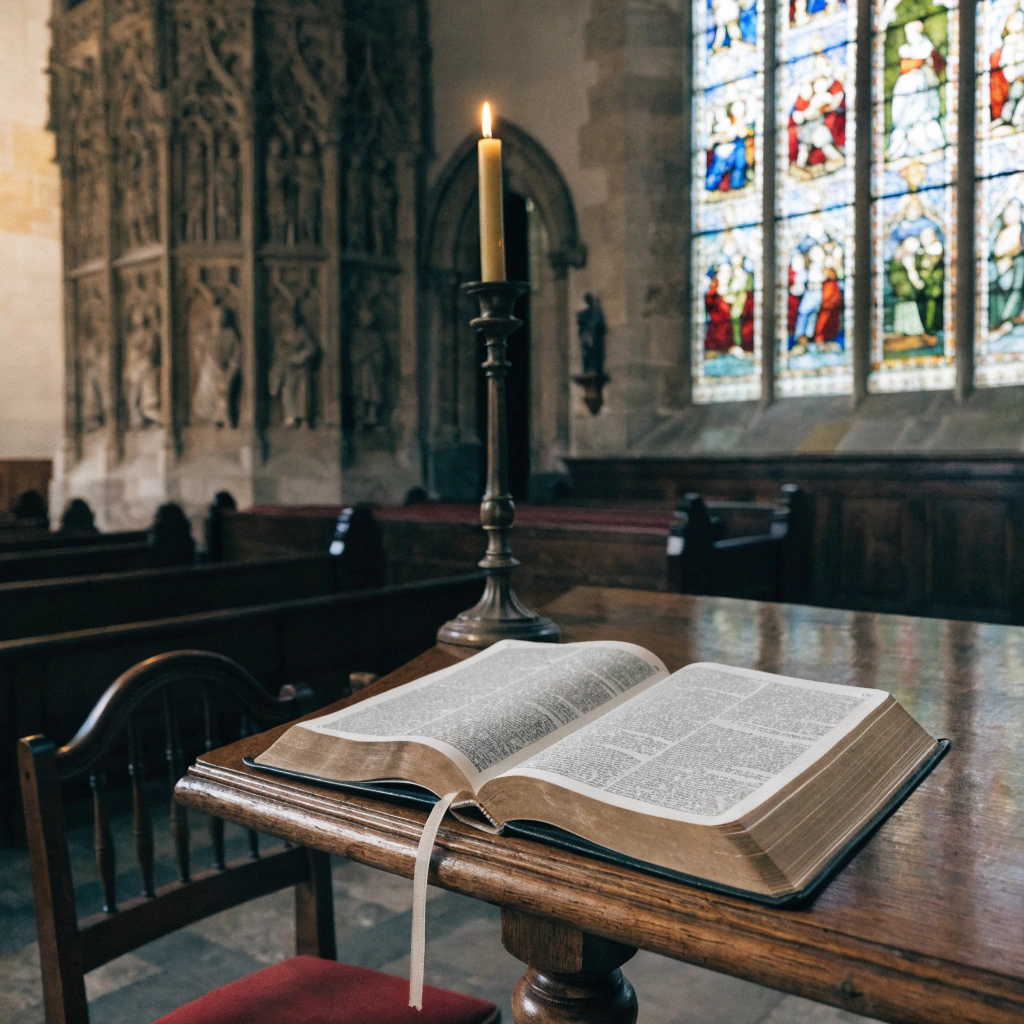
The Quran (Last Testament) is the most misunderstood book in Britain. Most people have never read it - and that is not their fault. What the West knows of the Quran has come downstream from centuries of sectarian politics, war, terrorism, cultural tribalism, and traditions that were attributed to scripture but never came from it.
What follows are seven things the British public believe the Quran teaches. Not one of them is in the book. Every single one comes from hadith - sayings attributed to Mahomet after his death. We respect the hadith as a historical document, but it is not scripture. The Shia tradition has held this position for centuries: no hadith is infallible, and any that contradicts the Quran is rejected. Here is what happens when you apply that standard.
Kill anyone who leaves the faith.
This is the big one. The claim that Islam mandates death for apostasy is repeated so often that most Britons accept it as fact. It is not in the Quran. Not once. Not anywhere. What the Quran actually says is the opposite: 'There is no compulsion in religion. The right path has been made distinct from error.' That is chapter two, verse 256. It is one of the clearest statements in the entire book. A person's faith is between them and God. No human being has the authority to punish another for what they believe. The death penalty for apostasy comes from hadith. It was a political tool used by early rulers to prevent dissent. It has nothing to do with revelation.
Stone adulterers to death.
Stoning is not in the Quran. The punishment prescribed for adultery in the Quran is lashing - one hundred lashes, delivered before witnesses, with strict evidential requirements that make conviction almost impossible without confession. Four eyewitnesses to the act itself are required. The standard is so high that it functions as a near-prohibition on punishment. Stoning was imported from pre-Islamic practice and codified through hadith.
Women must cover their faces.
The Quran commands modesty. It tells believing women to 'draw their coverings over themselves' so that they may be recognised and not harassed. That is dignity, not erasure. There is no verse requiring a woman to cover her face, her hands, or to disappear from public life. The burqa and the niqab are cultural garments rooted in pre-Islamic Arabian and Persian custom, codified through hadith and enforced by men who confused control with piety. Modesty in the Quran looks like what it has always looked like in every decent society - dignity in dress, restraint in conduct, respect between men and women. The British understood this once. We intend to understand it again.
Child marriage is permitted.
It is not. The Quran requires both maturity and consent for marriage. It speaks of marriage as a bond between adults built on 'affection and mercy'. The claim that Islam permits child marriage comes from hadith about the age of Aisha when she married Mahomet - accounts that are disputed even within Islamic scholarship and are absent from the Quran entirely. The Quran sets a standard of mental and physical readiness before marriage is valid. Any tradition that permits children to be married off against their will or before they are grown is a violation of the text, not a product of it.
Had Christianity been presented to the West through its worst excesses of people and not scripture, no one would have received the miracles of Christ either.
Kill the infidels wherever you find them.
This is the most weaponised verse in the entire book - chapter two, verse 191. What is never quoted is the verse before it: 'Fight in the way of God those who fight you, but do not transgress. God does not love the transgressors.' And the verse after it: 'But if they cease, then God is forgiving and merciful.' The instruction is defensive, conditional, and bound by limits. It was revealed during a period when the early believers were being driven from their homes and killed for their faith. Read in full, it is a permission to defend yourself - not a mandate for slaughter. The people who quote it out of context have either never read the surrounding verses or do not want you to.
Wage war on all Christians and tax them into submission.
This is chapter nine, verse twenty-nine - revealed during a specific military conflict with groups who had broken treaties. It is a wartime instruction, not a standing order. The same book calls Christians 'the nearest in affection to the believers'. The idea that God's final revelation commands permanent war against the people of His own earlier revelation is an absurdity that collapses the moment you read the whole text.
Depictions of the Prophet are blasphemy.
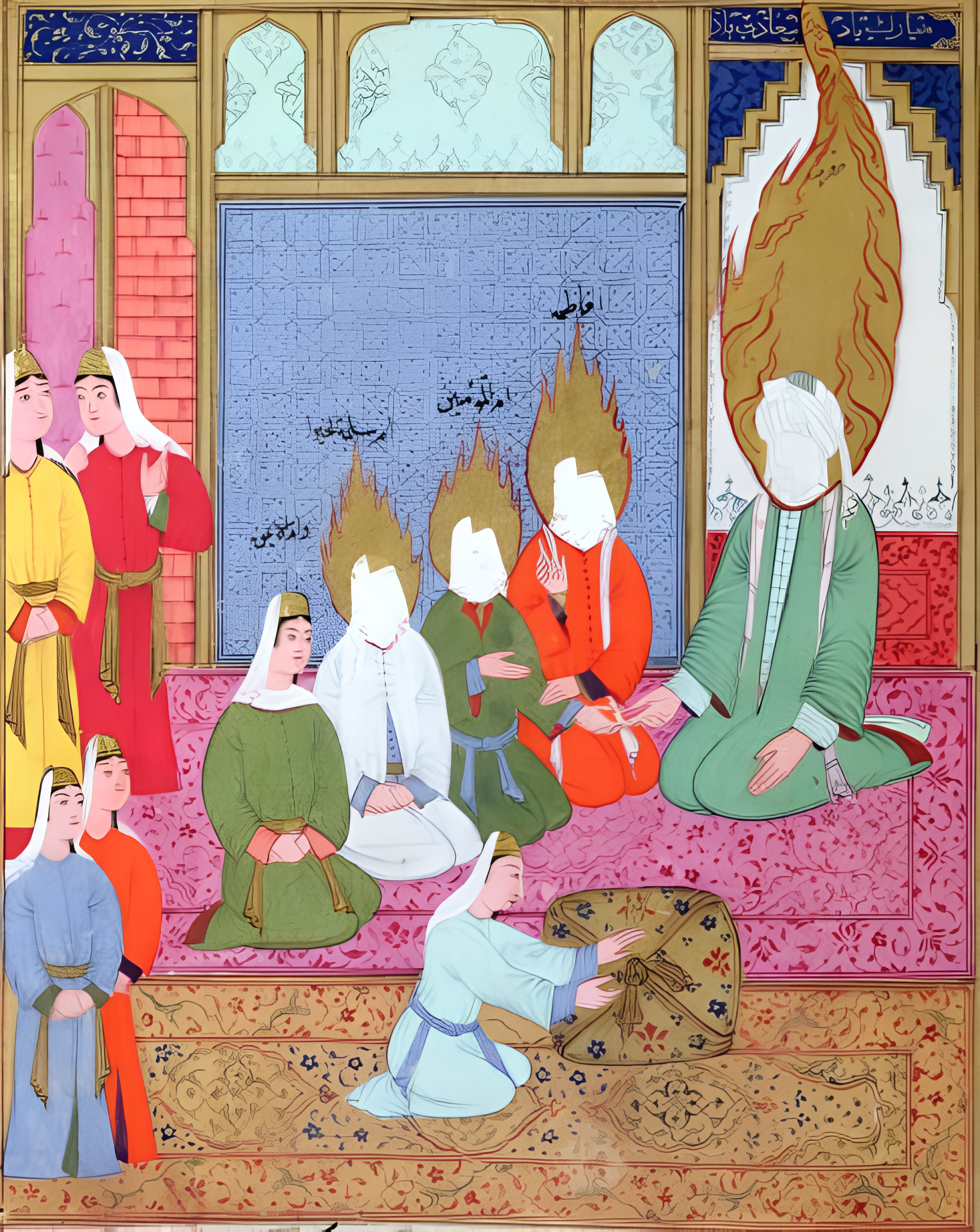
There is no verse in the Quran forbidding images of Mahomet. The prohibition is hadith-based, rooted in a broader Sunni tradition of iconoclasm that emerged well after the Prophet's lifetime. The Shia tradition - which we honour as the faithful continuation of the Prophet's household - has centuries of devotional art depicting Mahomet. Persian miniatures. Manuscript illustrations. Works of reverence created by believers who loved the Prophet and saw no sin in showing his face. Honouring the Prophet through art is not blasphemy. It is devotion. The iconoclasm that forbids it was a political choice, not a divine command.
The book itself.
Had Christianity been presented to the West through its worst excesses of people and not scripture - the politics, the tribalism, the interpretations of men who turned historical documents into weapons - no one would have received the miracles of Christ either. That is what happened to the Last Testament contained within the Quran. It was never presented to Britain through its text. It was buried beneath the men who claimed to carry it. The British never rejected God's word. They were never given it.
The Last Testament confirms the Torah, honours Jesus, and forbids compulsion in faith. Read it. Not the headlines. Not the hadith. The book itself. In English. And see whether the God who spoke to Abraham and Moses and Jesus had one more thing to say.
Remnant 1 · 12 March 2026
All articles →